Conference
Secretariat:
Conferences and Events Ltd
PO Box 24078, Manners St,
Wellington 6142
Email:
apcnz@confer.co.nz
Tel: +64 4 384 1511
Fax: +64 4 384 4667
|

Speakers
Details
of the speakers will be posted as they become available.
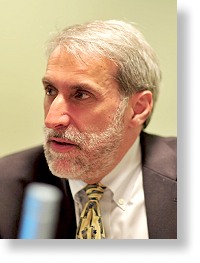
Daniel
Nocera (Massachusetts Institute of Technology)
Personalized
Energy for 1 (× 6 Billion)
Abstract here
Daniel
G. Nocera is the Henry Dreyfus Professor of Energy at the Massachusetts
Institute of Technology, Director of the Solar Revolutions Project and
Director of the Eni Solar Frontiers Center at MIT.
His group
pioneered studies of the basic mechanisms of energy conversion in
biology and chemistry. He has recently accomplished a solar fuels
process that captures many of the elements of photosynthesis outside of
the leaf. This discovery sets the stage for a storage mechanism for the
large scale, distributed, deployment of solar energy. He has been
awarded the Eni Prize (2005), IAPS Award (2006), Burghausen Prize
(2007), Harrison Howe Award (2008), ACS Inorganic Chemistry Award
(2009) and the U.N. Intergovernmental Renewable Energy Organization’s
Science and Technology Award (2009) for his contributions to the
development of renewable energy. He is a member of the American Academy
of Arts and Sciences and the National Academy of Sciences. He was named
as Times Magazine 100 Most Influential People in the World. Nocera is a
frequent guest on TV (CNN, ABC
Nightline, PBS, ABS Nature’s Edge, Jim Lehrer News Hour, NOVA, CBS,
CNBC, Discovery Channel, The Science Channel and Plum in the U.S. and
Explora and RAI in Europe), radio (NPR, Bloomberg News, CBS, CBC, BBC,
All Things Considered, Here and Now, Climate Connections, Voice of
America) and is regularly featured in print (New York Times, National
Geographic, Forbes, Discover, Wall Street Journal, Time Magazine, The
New Republic, U.S. News and World Report, Outside Magazine, Wired,
Technology Review).
His 2006 PBS show was nominated for
an Emmy Award. He sits on several advisory boards and is currently
working with several artists in the U.S and abroad, actors and
producers in Los Angeles and major business leaders in the U.S. to help
them develop a position that contributes positively to the energy and
sustainability challenge confronting this planet. In 2008, he founded
Sun Catalytix, a company committed to bringing personalized energy to
the non-legacy world.

Prof Akihiko Kudo (Tokyo University of Science)
Photocatalysts
for solar hydrogen production
Abstract here
Department of Applied Chemistry Faculty of Science,
1979-1983 Tokyo University of
Science
Bachelor of Science
1983-1988 Tokyo Institute of
Technology Doctor of Science
1988-1989
Post-doctoral fellow, University of Texas at Austin
1989-1995 Research
Associate, Tokyo Institute of Technology
1995-1998
Lecturer, Tokyo University of Science
1998-2003 Associate
Professor, Tokyo University of Science
2003-present Professor, Tokyo
University of Science
Awards:
Inoue Research Award for Young Scientists (1990)
Award for Encouragement of Research and Development from Catalysis
Society of Japan (2001)
Award of Japanese Photochemical Association (2009)
Research interest: Photocatalyst, electrocatalyst, inorganic
photochemistry
Original papers: about 160
Reviews and books: about 85
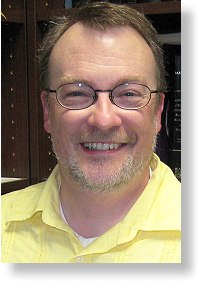
Jim
McCusker (Michigan State University)
Ultrafast
Excited-state processes in transition metal-based chromophores: From
Fundamental Photophysics to Applications in Energy Science
Abstract here
Jim
McCusker was born in New Haven, Connecticut in 1965. A graduate of
Bucknell University, Jim enrolled in the doctoral program at the
University of Illinois at Urbana-Champaign in 1987 and carried out
research with Professor David N. Hendrickson on the magnetic properties
of polynuclear Fe and Mn complexes as well as the ground- and
excited-state properties of Fe(II) spin-crossover complexes.
Jim
was awarded a two-year post-doctoral fellowship from the National
Institutes of Health in 1992 to work with Professor Thomas J. Meyer at
the University of North Carolina on the photophysical characterization
of second- and third-row transition metal polypyridyl complexes. Jim
began his independent academic career at the University of California
at Berkeley as an Assistant Professor of Chemistry in the fall of 1994.
The first paper out of his group was the first to identify the
sub-picosecond time scale associated with excited-state evolution in
[Ru(bpy)3]2+.
While at Berkeley Jim was named an Alfred P. Sloan
Fellow (1998 – 2000), a Hellman Faculty Fellow of the University of
California (1997 – 1998), in addition to receiving the Department of
Chemistry Teaching Award in 1999. Jim moved his research group to
Michigan State University in 2001 where he is currently Professor of
Chemistry. The central themes of his research group continue to revolve
around the ultrafast excited-state dynamics of transition metal
complexes – in particular as it impacts the development of solar energy
conversion strategies – as well as the interplay between zero-field
spin polarization and the excited-state dynamics of molecular systems.
 Cather
Simpson (University of Auckland)
Cather
Simpson (University of Auckland)
A New Twist in the Tale: Ultrafast Dynamics of Diphosphenes and Phosphaalkenes
Abstract here
Dr.
Cather Simpson joined The University of Auckland in 2007 to establish
and direct a new multi-user ultrafast laser and microfabrication
facility, the Photon Factory. Her appointment is held jointly in
Chemistry and Physics. In addition to her research in the fast
(10-6 to 10-15 second) chemical physics of photoactive molecules, she
lectures in the departments of Chemistry, Physics, and English.
Before joining the Faculty of Science, she held a tenured position at
Case Western Reserve University in the USA.

Hiroshi
Miyasaka (Osaka University)
Femtosecond Delocalization Dynamics of Cationic States in Photoconductive Poly(N-vinylcarbazole) Amorphous Solid.
Abstract here
Hiroshi
Miyasaka received his B.S. degree in Chemistry in 1980 and his Ph.D.
degree from Osaka University in 1985, under the direction of Professor
N. Mataga. After working as a research associate in the laboratory of
Professor Mataga at Osaka University, he joined the Department of
Polymer Science and Engineering at Kyoto Institute of Technology as an
associate professor in 1991. In 1996, he performed research in
Professor Frans C. De Schryver’s laboratory in Leuven, Belgium, as a
Visiting Scientist. In 2000, he moved to Osaka University and was
appointed to Professor at the Division of Frontier Materials Science,
Graduate School of Engineering Science at Osaka University. His current
research interests include time- and space-resolved laser spectroscopy
and laser processing of functional molecular systems such as conductive
polymers, electron donor-acceptor molecules, and photochromic systems
in the condensed phase. He received the Award of Japanese Photochemical
Association in 2002.
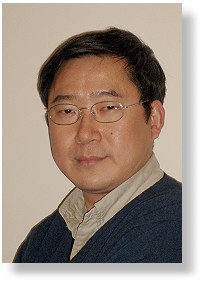 Guoqiang
Yang (Chinese Academy of Sciences) Guoqiang
Yang (Chinese Academy of Sciences)
Photoluminescent materials: structure, property and high pressure effect
Abstract here
Guoqiang
Yang was born in 1963 and received his BS degree (1985) in chemistry
from Peking University and PhD degree (1991) from the Institute of
Photographic Chemistry, Chinese Academy of Sciences. He was working in
the Institute of Photographic Chemistry (1991-1993), in Kyoto
University (1992-1993) as a Post-doc researcher of Japan Society for
the Promotion of Science, at the Ecole Nationale Superieure de Chimie
de Mulhouse, Universite de Haute-Alsace, France as a Visiting Professor
(1995, 2001, 2003), at the University of Illinois at Urbana-Champaign
as a research associate (1996-1999). From 1999, he has been working in
the Institute of Chemistry, Chinese Academy of Sciences as a full
professor. Now he is the director associate of the institute and the
director of the key laboratory of photochemistry.
His research
interests include optical functional materials and the effects on the
luminescent properties of materials. He has published 132 research
papers and applied 6 patents.
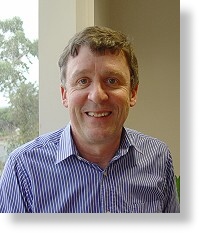
Keith Millington (Australian Commonwealth Scientific and
Research Organization)
Studying the photodegradation of materials using chemiluminescence
Abstract here
Keith
Millington was born in Birmingham in 1954. He received a BSc in
chemistry from the University of Warwick in 1983 and a PhD in 1987 from
the University of Southampton for his thesis on shapes of small
molecules. He joined CSIRO in 1990 from the UK nuclear industry. In
1994 he developed and patented Siroflash, a UV-surface treatment for
textiles used for preparing wool fabric for printing and as an
anti-pilling treatment. This work led to a US Innovative Technology
Award from Radtech North America in 1996. In 2003 his mechanistic work
on wool photoyellowing resulted in the award of a Gold Research Medal
by the Worshipful Company of Dyers in London. In 2007 he was awarded
the Centenary Medal by the Society of Dyers and Colourists. His current
research interests include free radical oxidation processes in polymers
and proteins and chemiluminescence emission from oxidised materials.
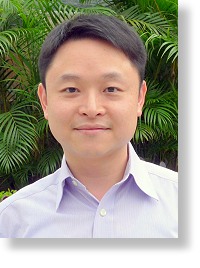
Kenneth
Kam-Wing Lo (City University of Hong Kong)
Luminescence and Biological Properties of New Cyclometallated
Iridium(III) Polypyridine Complexes
Abstract here
Kenneth
Lo obtained his BSc and PhD at The University of Hong Kong in 1993 and
1997, respectively. His PhD work centered on luminescent
transition metal complexes as DNA and metal-ion probes, and luminescent
polynuclear coinage metal chalcogenides. From 1997 to 1999, he
worked as a Croucher Foundation Postdoctoral Research Fellow at the
Inorganic Chemistry Laboratory, University of Oxford. He carried
out research work on genetic engineering and electrochemistry of
cytochrome P450cam and putidaredoxin. He joined the Department of
Biology and Chemistry of City University of Hong Kong as Assistant
Professor in 1999 and became Associate Professor B (Lecturer) in 2003
and Associate Professor A (Senior Lecturer) in 2007. He was
awarded the APA-Prize for Young Scientist by The Asian and Oceanian
Photochemistry Association in 2004. The main theme of his
research work is the utilization of luminescent transition metal
complexes as biomolecular and cellular probes.
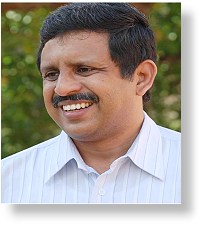 George
Thomas (Indian Institute of Science Education and Research) George
Thomas (Indian Institute of Science Education and Research)
Optical Properties of Hybrid Nanomaterials
Abstract here
George
Thomas has made significant contributions in several areas of
photosciences and nanomaterials and his group is currently focusing on
the studies related to light-matter interaction at the nanoscale. Some
of his recent efforts include (i) understanding the interfacial
properties of hybrid nanomaterials, (ii) integrating nanomaterials into
higher order assemblies and (iii) using such functionalized
nanomaterials as sensors, light-induced controlled release systems and
nanophoshors.
George Thomas is a native of India,
received his masters degree from the University of Pune and doctoral
degree in Chemistry from the University of Kerala and afterwards worked
as senior scientist in the Photosciences & Photonics Section of the
National Institute for Interdisciplinary Science & Technology
(CSIR) from July 1994 to April 2010. In May 2010, he accepted an
invitation from the newly established Indian Institute of Science
Education and Research, Thiruvananthapuram (Kerala) and joined as a
Professor. His research interests are in the areas of
photochemistry and material science.
George
Thomas is a recipient of several awards and distinctions: this include
the Shanti Swarup Bhatnagar Prize in Chemical Sciences (2006) awarded
by the CSIR, the MRSI Medal (2005) of the Materials Research Society of
India and the CRSI Bronze Medal (2004) of the Chemical Research Society
of India. He is an elected fellow of Indian Academy of Sciences and
Honorary Faculty Member of the Jawaharlal Nehru Centre for Advanced
Scientific Research, Bangalore. He is one of the associate editors of
the Bulletin of Material Sciences published by the Indian Academy of
Sciences, Bangalore. He has published around seventy five peer-reviewed
original research articles and four chapters in books and one of the
inventors of a US patent.
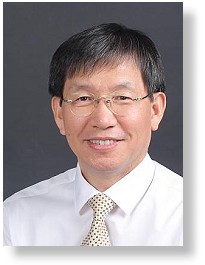 Kyung Byung Yoon from Sogang University, Korea Kyung Byung Yoon from Sogang University, Korea
Photovoltaic Effects of Zeolite-Encapsulated CdS and PbS Quantum Dots
Abstract here
Kyung
Byung Yoon received his B.S. in 1979 from the Department of Chemistry,
Seoul National University. In 1981, he obtained his M.S. from the
Department of Chemistry, Korea Advanced Institute of Science and
Technology (KAIST), Seoul. From 1981 to 1984 he was employed by Chon
Engineering Co. LTD, Seoul, Korea. There he gained experience in
catalyst design and the engineering of chemical process plants. In
1989, he earned his Ph.D. degree in inorganic chemistry from the
Department of Chemistry, University of Houston, Texas, where his
research advisor was Professor Jay K. Kochi. He has been an Assistant,
Associate (1993) and Full Professor (1998) in Sogang University, Seoul,
Korea from 1989 to the present. He is currently serving as the Dean of
the College of Natural Science and is also leading the Korea Center for
Artificial Photosynthesis, Sogang University. He is currently the
Director of the Scientific Affairs of FACS and holds the Councilorships
for the International Zeolite Association and the Asian-Oceanian
Photochemistry Association.
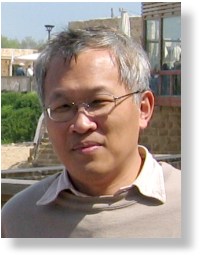 Chi-Kung Ni National Tsing Hua University, Hsinchu, Taiwan Chi-Kung Ni National Tsing Hua University, Hsinchu, Taiwan
Molecular mechansim on the photostability of amino acid chromophores
Abstract here
Chi-Kung
Ni received his B.S. in Chemistry from National Tsing Hua University,
Taiwan in 1985 and his Ph.D. in Physical Chemistry from Department of
Chemistry, Columbia University, NY in 1993. He was a postdoctoral
associate in University of California, Berkeley (1993~1995) before
joining the Institute of Atomic and Molecular Sciences (IAMS), Academia
Sinica, Taiwan. He is currently a Research Fellow in IAMS and a
professor in the Department of Chemistry, National Tsing Hua
University, Hsinchu, Taiwan. His research includes UV photodissociation
dynamics of organic molecules in molecular beam, energy transfer of
highly vibrationally excited molecules studied by crossed-molecular
beam, MALDI mechanism, and X ray photochemistry.
|
Sponsors


Bronze Sponsors




|
|
